Notice: Function _load_textdomain_just_in_time was called incorrectly. Translation loading for the live-composer-page-builder domain was triggered too early. This is usually an indicator for some code in the plugin or theme running too early. Translations should be loaded at the init action or later. Please see Debugging in WordPress for more information. (This message was added in version 6.7.0.) in /home/rooikran/public_html/wp-includes/functions.php on line 6121

Notice: Function _load_textdomain_just_in_time was called incorrectly. Translation loading for the live-composer-page-builder domain was triggered too early. This is usually an indicator for some code in the plugin or theme running too early. Translations should be loaded at the init action or later. Please see Debugging in WordPress for more information. (This message was added in version 6.7.0.) in /home/rooikran/public_html/wp-includes/functions.php on line 6121

Notice: Function _load_textdomain_just_in_time was called incorrectly. Translation loading for the vega domain was triggered too early. This is usually an indicator for some code in the plugin or theme running too early. Translations should be loaded at the init action or later. Please see Debugging in WordPress for more information. (This message was added in version 6.7.0.) in /home/rooikran/public_html/wp-includes/functions.php on line 6121
Navel - Rooikrans | AGRI Business

Peeling off the layers...

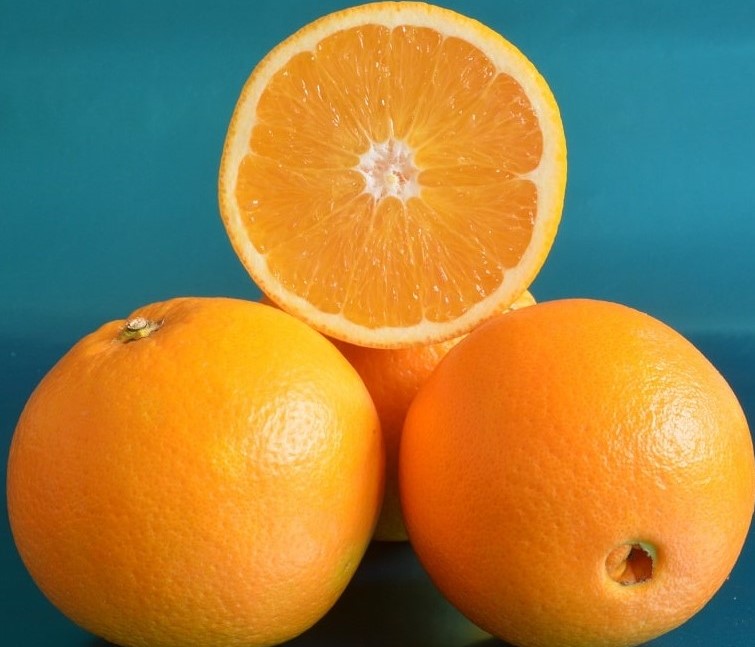
The classic well known orange. It is a sweet, large, seedless fruit. Their skin is a deep orange colour with a moderately pebbled surface.

Limonin is a natural compound that turns the juice bitter.  This compound is fund in the flesh of the Navel and therefore the juice is best enjoyed freshly squeezed.

The name of the Navel originates from the second “twin” fruit opposite it's stem. The second fruit remains underdeveloped, but from the outside, it resembles a human navel—hence the name.

The Navel is a single mutation that happened in the early 1800's on a Selecta Orange tree planted in a monastery in Bahia, Brazil. The mutation of this sweet orange caused the secondary fruit to develop under the peel of the primary fruit. This mutation also caused the fruit to be seedless.

Navels are available earlier in the season than Valencias.